
Short story by Chronicle Editor Pat Reilly
He became a man by need and found the important things in life
When the doctor told his father to slow down and his mother to stop pretending she didn’t need rest, Caleb didn’t hesitate.
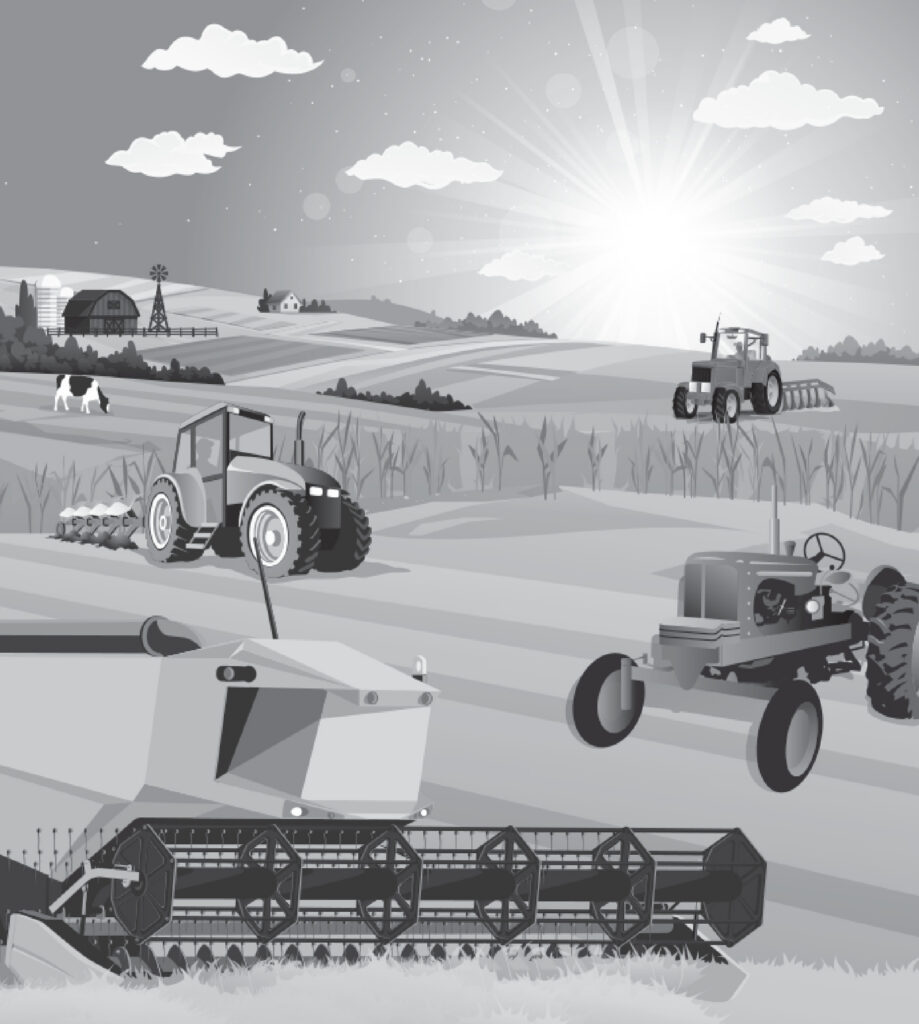
At the young age of 26, he traded weekend fishing trips and a half-finished degree for 500 acres of corn, soybeans, and responsibility. The farm had been in his family for three generations, a long stretch of rolling land bordered by oak trees and a creek that swelled every spring. It wasn’t glamorous, but it was theirs.
The first few months nearly broke him as he got used to what would no doubt be his life going forward.
He rose before sunrise, the sky just a pale wash over the fields, and didn’t quit until the last orange light slipped behind the silos. He learned quickly that tractors don’t care how tired you are and livestock don’t wait for a better day. His hands toughened. His shoulders broadened. His parents watched from the porch some evenings, pride mixed with guilt, but Caleb never let them see how heavy it felt.
By Friday nights, though, he allowed himself one small ritual.
He’d shower, pull on clean jeans and a pressed flannel, and drive his dusty pickup into town. The place was Miller’s Tavern, all neon beer signs and the smell of fried cheese curds and burgers sizzling on a flattop grill. Farmers, mechanics, teachers …. just about everyone drifted through its doors.
At first, people noticed him because he was “Tom’s boy,” the kid who’d stepped up. Word travels fast in a small town. Then they noticed other things: the way his forearms flexed when he lifted a basket of wings, the easy smile he gave the bartender, the quiet confidence of someone who knew exactly who he was.
Before long, the young women noticed too.
They’d slide into the booth across from him, ask about the crops, laugh a little louder than necessary. A few came out to the farm once or twice, more for the novelty than the work. Caleb was polite, kind even, but he could tell when someone was drawn to the story more than the soil.
Then one night, she came in wearing mud on her boots.
Her name was Emma. She wasn’t from far-just the next township over-and she worked at the co-op. She didn’t flutter her eyelashes or ask silly questions. She sat down, stole one of his fries without asking, and said, “Heard you’re trying to beat the rain on that south field. You’ll want to check your drainage tile by the fence line.”
Caleb blinked. “You been spying on me?”
She grinned. “I sell fertilizer. I know everything.”
They talked for hours-about crop rotations and high school basketball, about the weight of expectation and the strange comfort of routine. She didn’t seem impressed by the acreage or the story. She asked about his parents. She asked if he was sleeping enough.
The next morning, she showed up at the farm in old jeans and a faded cap, ready to work.
She learned quickly. Or maybe she already knew. She wasn’t afraid of dirt under her nails or long afternoons stacking hay. She laughed when a calf nudged her into the fence and laughed harder when Caleb tried to pretend he hadn’t rushed over in a panic.
Seasons shifted.
Spring planting became summer green, then gold in the fall. They worked side by side, hands brushing as they loaded tools, shoulders touching on the tractor bench seat. In the evenings, they’d sit on the tailgate, watching the fields ripple like an ocean in the wind.
Caleb realized one night, as Emma leaned her head against his shoulder, that the farm no longer felt like a burden he carried alone. It felt like something they were building together.
Town still buzzed when he walked into Miller’s. The glances were still there. But now Emma walked in with him, grease on her cheek from the day’s work, and slid into the booth beside him as if it had always been hers.
He didn’t mind being the attraction anymore.
He’d already found what he was looking for-someone who saw past the acreage, past the story, and chose the man standing in the middle of it.
And under the wide Midwestern sky, 500 acres no longer felt overwhelming.
They felt like home.