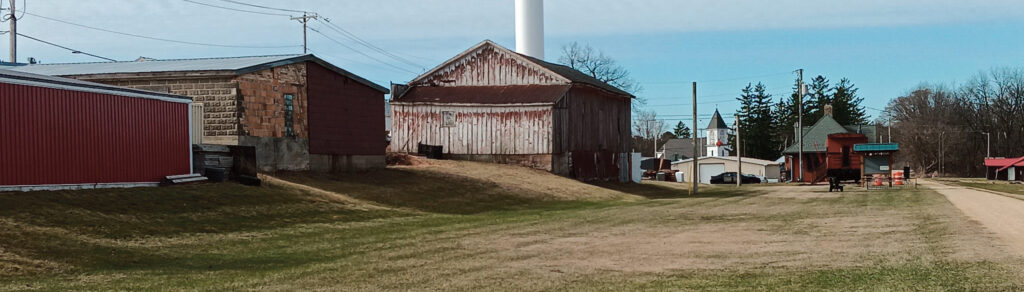
The Military Ridge is the divide between the Wisconsin River watershed and the Pecatonica and Rock River watershed to the south.
The western end of the Military Ridge allowed strategic views to both north and south. Most of the Military Ridge Trail follows the former Chicago and Northwestern Railway corridor and has a grade of only 2 to 5 percent.
Last year, the trail users were estimated to be close to half a million, with use by hikers, bicyclists, snowmobile users, cross-country skiers, and wheelchairs.
Before the 18/151 expressway route that we are familiar with now, there was just a dirt path parallel to where the railroad was, and the trail is now. The original road in the 1800s was called the Military Ridge Road. Ridgeway was settled in 1828 on this dirt path by J.B. Skinner, along with other lead miners during the lead mining boom. At the beginning of mining in Ridgeway, the focus was on shallow “crevice” deposits. Farming was discouraged. The first census showed that almost half of the Wisconsin territory’s 11,583 white people lived in Iowa County.
The first Military Ridge Road, built in 1835-1837, was 33 feet wide. It was one of the first real roads in Wisconsin. The road was crude and often impassable. The maintenance by the settlers in the area was the reason the road was kept passable. The initial cost for construction of the 234-mile road from Fort Howard near Green Bay to Fort Crawford near Prairie du Chien via Fort Winnebago at Portage was $12,000. This first gravel road was originally Wisconsin State Road 19 until 1920, when renamed to become part of US Highway 18.
The Ridgeway Main Street and the railroad were the heart of the Ridgeway community. The main street businesses developed around the railroad. Later in 1938, when the gravel highway was paved with concrete, the road was again renamed US Highways 18/151. Early pictures of Main Street show details like the fact that before the roadway was cut to the east of the Ridge Hotel, the next house was moved down the street to Old Main Street. The details of the roof and the Ayers family confirm this.
The Ridge Hotel dates back to 1841 as a stage stop on the Military Road. The 23-room hotel also served as the village switchboard until the dial telephone system came to be. At Hyde, the Ruggles Farm Stagecoach stop, also known as Rugglesville, was another stagecoach stop. The barn at Hyde was started in 1842 and completed in 1852. The Ruggles’ house, after the addition, could house 40 travelers. Mineral Point at this time was the county seat for legal document registration.
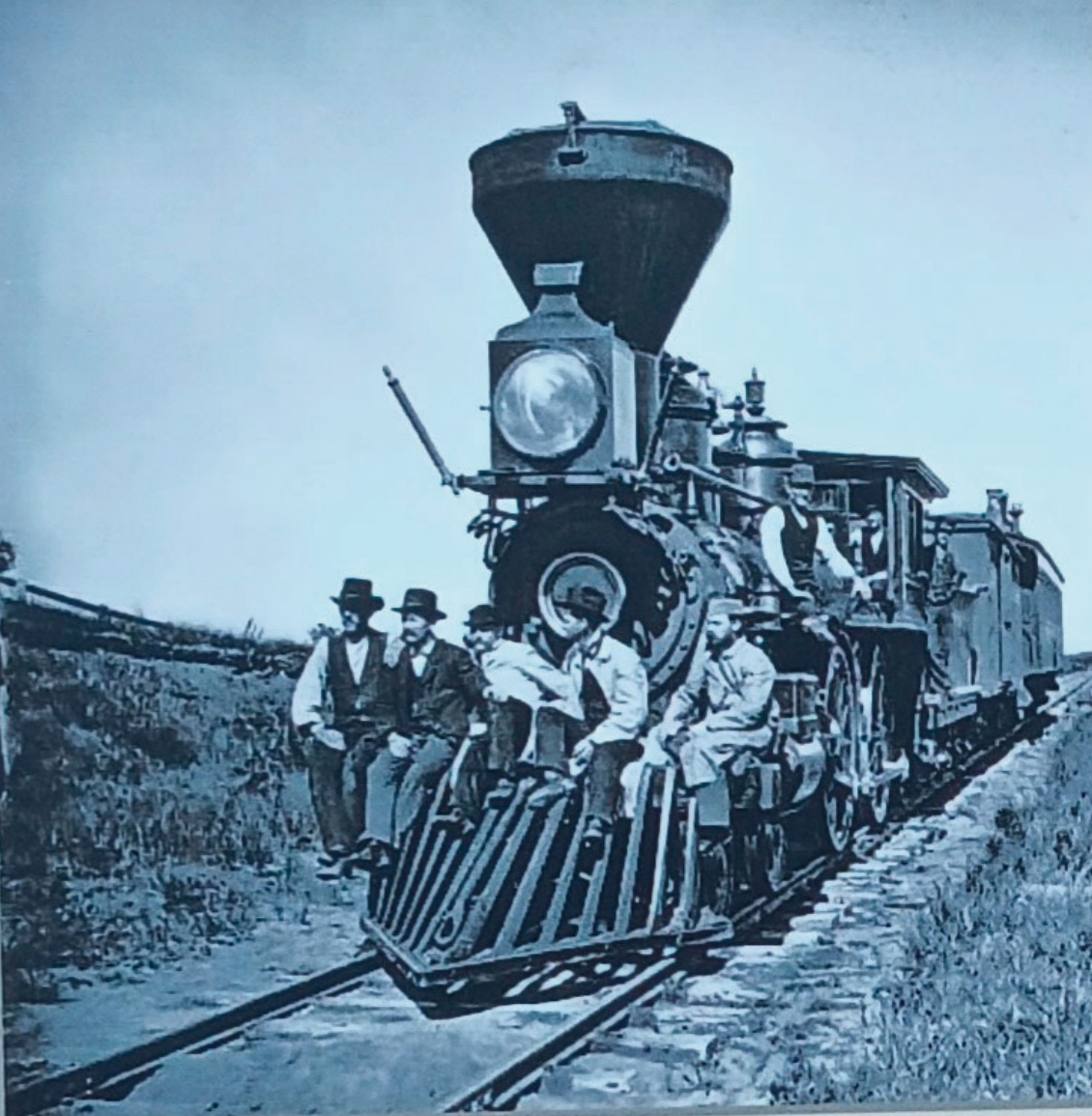
The railroad became a reality for Ridgeway in 1880 when the Chicago and Tomah Railway reached agreements with the local communities to invest in depots. This later became the Chicago and Northwestern Railroad “Ridge Runner” line that went from Madison to Montfort. The first train that traveled to Ridgeway in the fall of 1881 was a small wood-burning engine with an oversized smokestack.
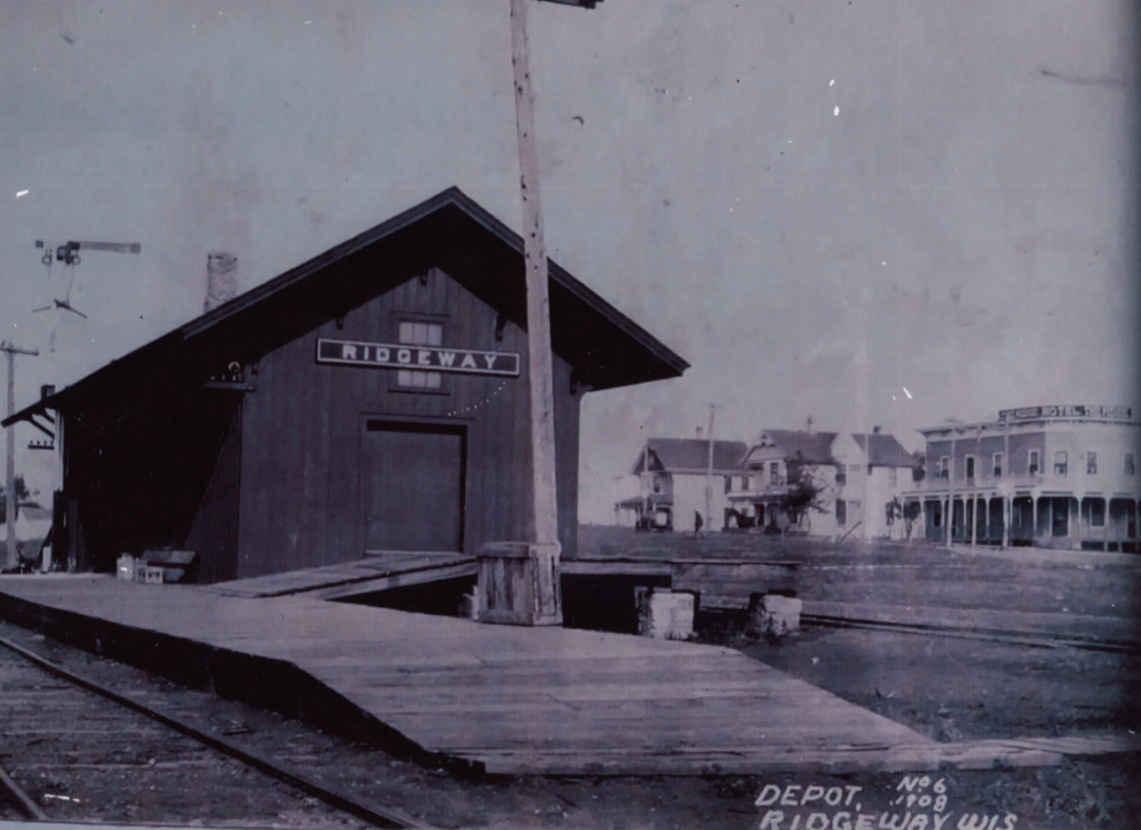
The railroad triggered local growth because it transported local agricultural goods and the early settlers. On many days, two passenger trains and several freight trains were on the tracks daily. This is where many of our service members left to serve our country in the military. Records show that more than 250 military service people from Ridgeway served in either the Civil War or World War I.
On July 24, 1910, just months after a 64-22 referendum vote against fire protection, a fire destroyed half of Ridgeway’s business district. Then, three years later, still without a village fire department, 17 buildings were burned. It was this second major fire on May 1, 1913, that also consumed the original train depot. The present depot was constructed as the middle-sized of three standard wood-frame depot plans in September of 1913. The materials on a manifest had just enough materials to construct this stock design. The materials came via the railroad.
The depot served the local stores, which received boxes and crates of dry goods, hardware, canned food, and medicine. The railroad carried the mail and packages for families that placed orders in Montgomery Ward or Sears Roebuck catalogs. In an article in the North Western Newsliner dated November 1954, Franklin Robb, the Ridgeway agent, confided that our local furniture store accounted for 75% of the “Less than Container Load” business in Ridgeway. They all arrived at the depot. Other users of the railroad for bulk included a livestock yard where Rockcrete Concrete is now located. There was a crop planting supply and feed mill in the area where Michael Larson Cabinetry is located now. Ridgeway Lumber and Fuel had lumber and several different bins of coal for home and other coal heating at the time. Farm machinery and equipment like silos were delivered by rail and were exciting and interesting.
With the decline of passengers and freight, the depot was no longer needed. In December, 1950, the PSC allowed passenger trains to be discontinued, and in January, 1951, an express coach was added to the freight train for a few passengers who still traveled by train. In 1976, the depot was sold to Ayers Furniture to be used as a warehouse for many years. Ayers Furniture is credited with maintaining the depot in a restorable condition.
The depot was the lifeblood of the community. The telegraph was the lifeblood of the depot. The Station Master was responsible for three telegraph lines. While the second depot was being built in 1913, the Station Master and his wife lived in a boxcar to maintain the three telegraph lines. The one line was for telegrams, one for railroad business, and one for the central dispatcher. At 11:00 a.m. every day, the agent received a message from the central dispatcher to confirm the time on the regular clock for all trainmen. The telegraph was the only timekeeper connected to the outside. The central dispatcher directed the trains on and got them off the side tracks, which was the priority over all other messages.
In the late 1800’s and early 1900’s, the station agent sold tickets for local excursions or for travel to Maine or California. The agent calculated, collected the fare, then stamped each ticket in the metal ticket dater. Every passenger trusted the experience and knowledge of the local station agent.
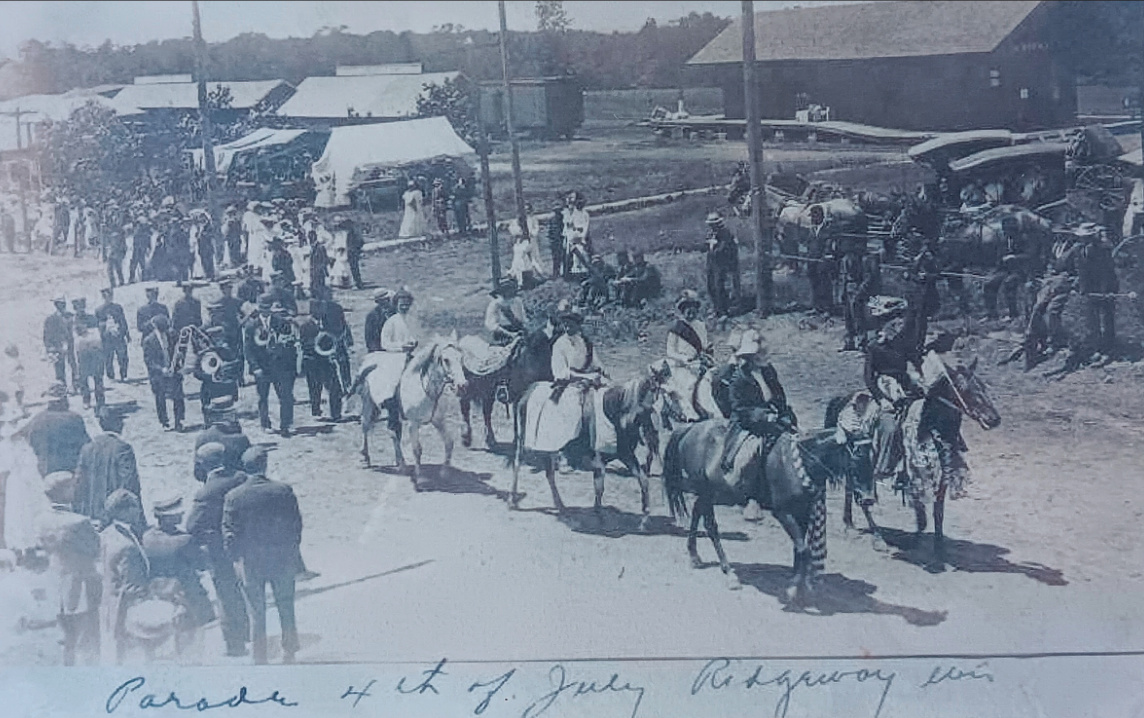
The present caboose sits next to the only remaining train depot on the abandoned Chicago Northwest railroad line from Madison to Lancaster. The depot was restored in 2002. The caboose was moved to the site in July 2002. After that, the depot and caboose have been used for meetings and educational tours for the public and local school groups. The depot and caboose are adjacent to the Ridgeway Veterans Memorial Park, which is also part of the historical scene. The area was the site for community celebrations, including the big top circus that traveled by train.